Training & Resource Library
As an employer, the safety and health of your employees is part of doing business. In an industry where employers must wear multiple hats, the safety and health hat cannot be ignored. The agriculture industry is consistently ranked as one of the most hazardous industries in the country. There are unique challenges the industry presents that challenge the application of traditional programs, but if you’re in this industry, you know how to rise to a challenge. Here are some tools and resources to help.

SAFETY PAY$ NEWSLETTER
-
January
Welcome! Most common accidents and updating business contacts.
-
February
Minimum wage and other new year updates. Recap of 2024. Updated Stay at Work reimbursements. OSHA 300 recordkeeping. Safety Tip: shop safety.
-
March
First aid and claims initiation. Safety tip: energy control.
-
April
Ag Safety Day recap and the employer’s report of accident. Safety tip: machine guarding.
-
May
We welcome spring with a new safety tip: ladder safety, and learning about claim valiidity and grounds for protesting claims.
-
June
A reminder on how to prevent heat related illness and mitigate wildifire smoke exposure. A step-by-step guide for ongoing claims management.
-
July
School is out, but safety is in. In this issue we address some essential summer safety tips: tractor safety and understanding independent medical exams.
-
August
Stay a step ahead. Learn how to protect workers from slips, trips, and falls. What do you need to know to protest a claim? Heat & wildfire smoke resources. Stay informed with all of our upcoming events.
-
September
Confined spaces might be silent killers at your workplace. Stay compliant and save a life with the information in this newsletter. Then save money with the Stay at Work workers' comp incentive program!
-
October
National Farm Safety Week means a lot of great FREE webinars and training information! Learn what to expect from an L&I safety compliance inspection with a detailed description. Know the difference between time loss and Kept on Salary for workers' comp claims.
-
November
Plan your winter safety training now! Here is a list of upcoming events you can register for. How to prepare for workplace accidents and be prepared with an injured worker packet.
-
DECEMBER
DOSH got you down? How to appeal a DOSH violation and learn about vocational services for injured workers.
UPCOMING TRAINING EVENTS
Safety Focus Friday Recordings
Quick training videos to help employers navigate workplace safety and industrial insurance in Washington.
This brief overview of Washington's workers' compensation insurance provides some understanding of a complicated system.
Learn what employers need to know about permanent partial disability claims.
Learn about what Washington employers need to know about preparing for an emergency at the worksite.
Learn what Washington employers need to know about preparing for an emergency at the worksite.
Understand when an activity is covered and is not covered by workers compensation even when the worker is on a momentary departure from their work tasks. Examples include getting coffee, using the restroom, or taking a break.
Don't waste time doing walkthroughs with a compliance mindset. Use this valuable time to help prevent injuries, reduce claims, and improve your safety culture.
Learn about the benefits and risks of participating in a retrospective rating program. Being part of these programs takes a commitment from pre-hire to post-accident. In return, employers may receive refunds on their workers’ comp premiums.
Learn about the requirements for employers when it comes to first aid in the workplace.
The last thing you want to do is answer everyone demanding questions after a workplace accident. Labor and Industries claims staff, safety compliance officers, internal safety, human resources, risk management, doctors, etc. all need information following an accident. Every time. Learn about what you need to help streamline your current process so you’re not duplicating the same information, saving you time, money, and headaches.
The existence of confined spaces at worksites are a hazard some employers may not realize their employees are exposed to. Focusing on confined space safety in agriculture, this overview briefly describes what employers need to do to stay in compliance and keep employees safe.
Here's another incentive to employ injured workers. Make sure you know how to take advantage of all the money available to you through the workers compensation system. Learn what a preferred worker is and about the benefits of employing a preferred worker.
Sometimes simple hazards cause the most frequent and most serious injuries. Although slips and trips may not be directly regulated, year after year, they create a lot of claims. Ensure you're doing everything you can to mitigate workplace risks and prevent these types of accidents.
Nothing is final until it is final. Learn what you can do when you, as an employer, do not agree with a department decision regarding industrial insurance claims.
The number one greatest risk to employees across industries is driving. Those in agriculture use unique equipment and have unique situations that increase the risk. Ensure you're doing everything you can to mitigate the it.
Learn about the difference between modified duty work and making accommodations to meet the American Disability Act.
Most farms and warehouses have shops for onsite repairs or regular maintenance. Shops are easy places to find several serious hazards. Here is a quick video to help navigate shop safety inspections.
Funding is available to help Washington workers stay motivated and gain basic skills through Skill Enhancement Training (SET) while they heal and participate in vocational rehabilitation services. Learn about this innovative program to help build your workers' compensation claims management program.
Ladder falls are a serious hazard in agriculture, and it's not just in tree fruits. Many employers use ladders for various tasks. Ladder safety is an important part of your safety and health program. Learn what you can do to mitigate hazards.
Learn how occupational disease claims differ from injury claims.
Accidents are by definition unexpected. How can you prepare for something that is unexpected? Let us give you some tips.
Accidents are by definition unexpected. How can you prepare for something that is unexpected? Here are four steps that can help.
Build relationships with local healthcare providers.
Create an injured worker packet.
Have an accident investigation plan.
Prepare for workplace safety compliance inspections.
Webinar Resources
Characterstics of the agriculture industry may leave farmers vulnerable to human traficking. Find out what you can do to identify and mitigate these risks.
Are you prepared for a DOSH inspection? Learn what to expect.
Labor and Industries Division of Occupational Safety and Health (DOSH) inspectors are not allowed to give advanced notice, which means they can show up at your workplace at any time. They are looking for safety and health violations and if they identify serious violations, you may receive a penalty. Preventing accidents not only protects workers, it may help you through these inspections.
It’s important for employers to understand how to read the activity prescription form of an injured worker in order to meet the work restrictions and return the injured worker to work.
Returning injured workers to work as quickly and safely as possible is a win for everyone. In order to do so, the employer will need to meet the restrictions outlined by the provider on the activity prescription form.
Learn how to protect employees from wildfire smoke exposure and ensure you are in compliance with Washington State standards.
Washington State enforces WAC 296 - 307 G-1 for wildfire smoke exposure. Learn how to stay in compliance with the standard and how to protect your employees.
Get reimbursements when you return injured workers back to work with modified duties.
Washington State employers pay into an industrial insurance program that supports returning injured workers back to work. Not using this program after a workplace injury costs you money. Learn how to use this program to not only save money on industrial insurance premiums, but to receive reimbursements for the injured workers salary, tools or equipment, and even clothing.
Ensure you know the most current outdoor heat exposure regulations since the update in 2023.
Index of Topics
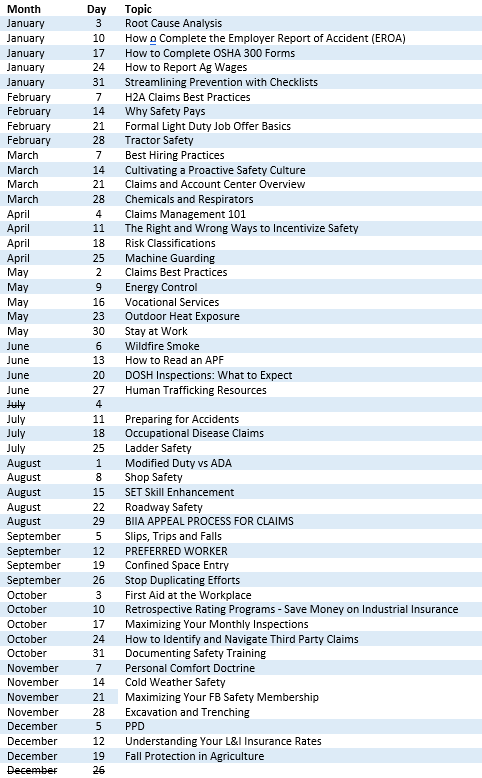
OSHA Excavation & Trenching Handout
Excavation & Trenching Competent Person Evaluation
Contractor and Laborer Die in Trench Collapse
Don't get fooled! Excavating and trenching is just as dangerous for agriculture workers as it is for construction workers. Make sure you know what to look for and how to protect employees from cave-ins.